On this page you can find information about the BRYS concept thermostat. If you have any questions about BRYS, please contact the principal investigator behind the design: Dr. Lenneke Kuijer, Assistant Professor at the Department of Industrial Design of Eindhoven University of Technology.
For the Dutch page follow the following link: BRYS – inspiratie voor natuurlijk comfort
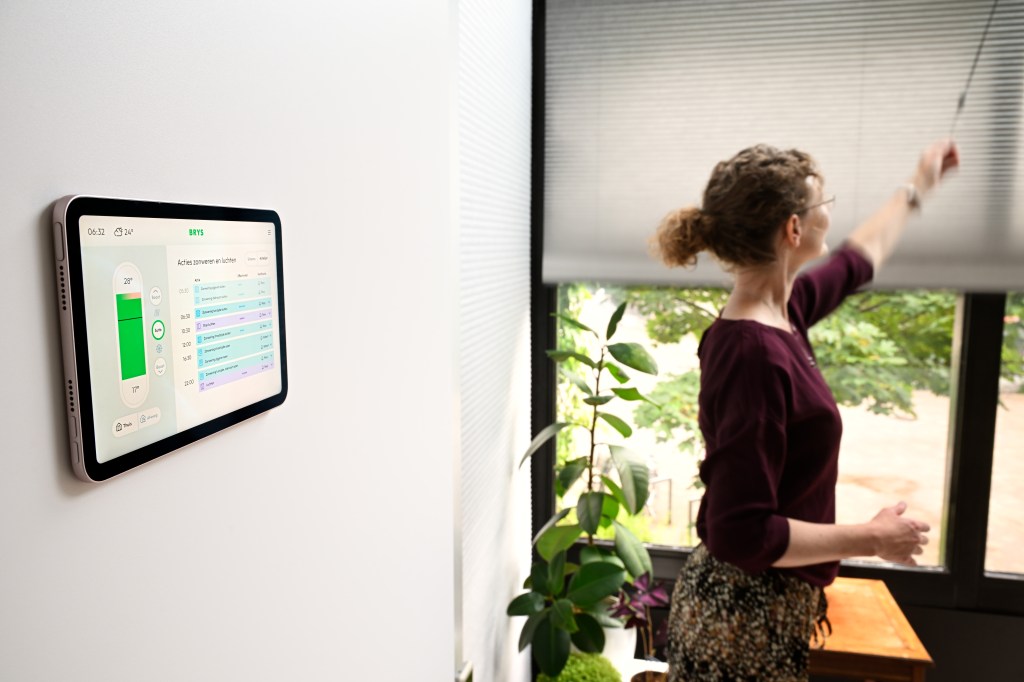
BRYS is a concept thermostat designed based on scientific research into the future of summer comfort in Dutch households. The research behind the BRYS thermostat can be found on the research page of the project. Links to the three stakeholder reports – and an interim report on effective shading and ventilating – that were released during the project can be found below. The research was funded by the Dutch Research Council (NWO) and carried out in collaboration with: Itho Daalderop, Auping, Klimaatverbond Nederland, Havensteder and Romazo.

The three stakeholder reports published during the project and an intermediate report on effective shading and ventilating. The image links through to the PDF.
BRYS is not a product that will be put on the market, but intended as a source of inspiration for HVAC companies (companies active in the Heating, Ventilation and Air-Conditioning market) and designers and researchers in this industry. BRYS was launched at the VSK Trade Fair (Utrecht, 6-9 February 2024), the largest HVAC Trade Fair in the Netherlands, as part of the Itho Daalderop stand. BRYS has been developed in collaboration with households and experts, but has not yet been tested for longer-term effects in practice.
This website contains materials designed to make the use of the ideas behind BRYS available to anyone who wishes to use it (subject to the terms of the Creative Commons Licence). The materials consist of:
- A one-and-a-half-minute video explaining the core modules of BRYS with Dutch subtitles and English voice-over
- A link to the BRYS demo interface with an example of the thermostat set for a fictitious household.
- A copy of the Figma file with the interactive demo of BRYS [available upon request].
- An explanation of the four core modules of BRYS with additional design material for other use cases.
- Calculation models with explanations for calculating the timing and effectiveness indications for sun protection and skies.
All materials related to BRYS are available under a Creative Commons CC-BY-NC 4.0 Licence. The video and interface of BRYS were created in collaboration with design agency Clarify and must be assigned to Clarify-Lenneke Kuijer upon reproduction.
1. BRYS video
The BRYS video offers a short (1:30) introduction to the thermostat concept. The video discusses the four main functions of the design: (1) shading and ventilating, (2) comfort range, (3) boost function, and (4) comfort training.
2. BRYS demo interface
The BRYS demo interface is designed with a specific use case in mind, illustrating a possible elaboration of the concept. The scenario is a two-person household (Roxy and Robert) in a corner house with high-temperature heating and a split-unit air-conditioning.
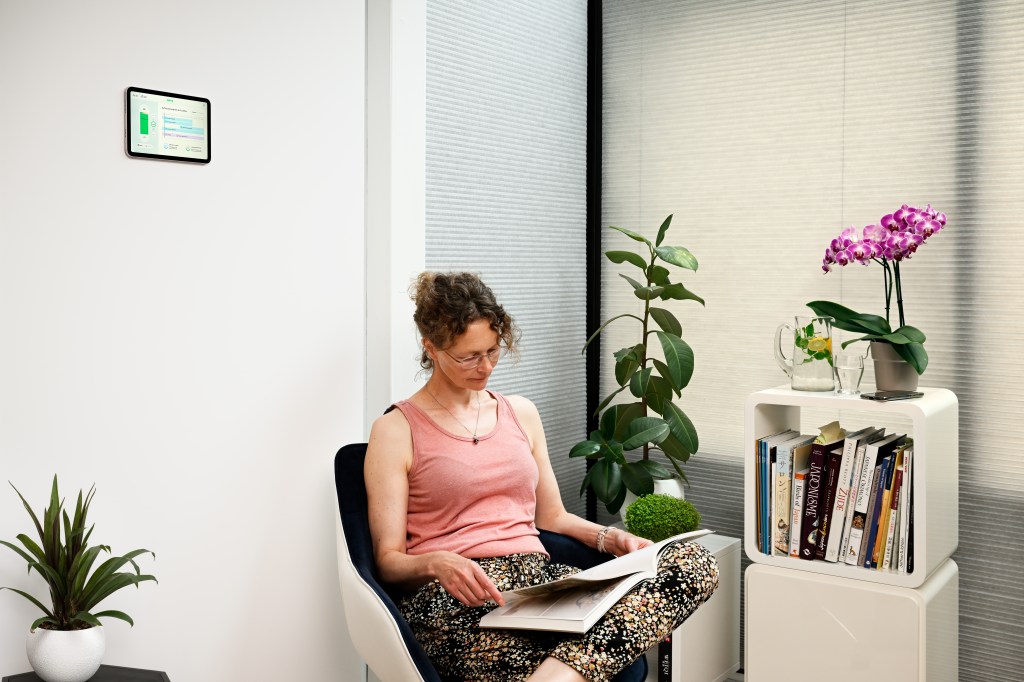
The reason for choosing this scenario is because most households in the Netherlands use a central heating boiler, and the most common system for cooling is air-conditioning. The type of heating system and the presence and type of cooling system depend on the configuration of the interface. In low-temperature systems, such as underfloor heating with a ground source heat pump or air-water systems, a set-back temperature (a lower temperature that automatically activates in the ‘Away’ mode) and the Boost function do not apply. Additional design material is available for other scenarios under point 4.

Link to Figma prototype BRYS (will ask for login information or making a free account).
3. Open access copy of the Figma file
An Open Access version of the Figma file of the BRYS Interface is available upon request. Please contact Lenneke Kuijer.
4. Explanation of main modules and additional design material
Below you will find further explanations of the different components of BRYS and additional visual material for other scenarios. These are organised according to the four main modules of BRYS: shading and ventilating, comfort range, boost function and comfort training.
Shading and ventilating
In order to effectively keep a home cool in hot weather, the way in which the home is designed and the systems that are in place are of primary importance. How much sun can come in? How well is the dwelling insulated and how is it oriented? What kind of ventilation system does the dwelling have? Which windows can be (safely) opened? What kind of shading is available? The design of the environment also plays a major role in this. Is there greenery in the area? Other buildings? Is there noise pollution or pollution? Within these circumstances, effectively shading and airing a home can make a big difference to the indoor temperature. Theoretically up to 9 degrees Celsius. Because heat has not historically been a major problem, Dutch households lack important knowledge and skills to apply it properly.
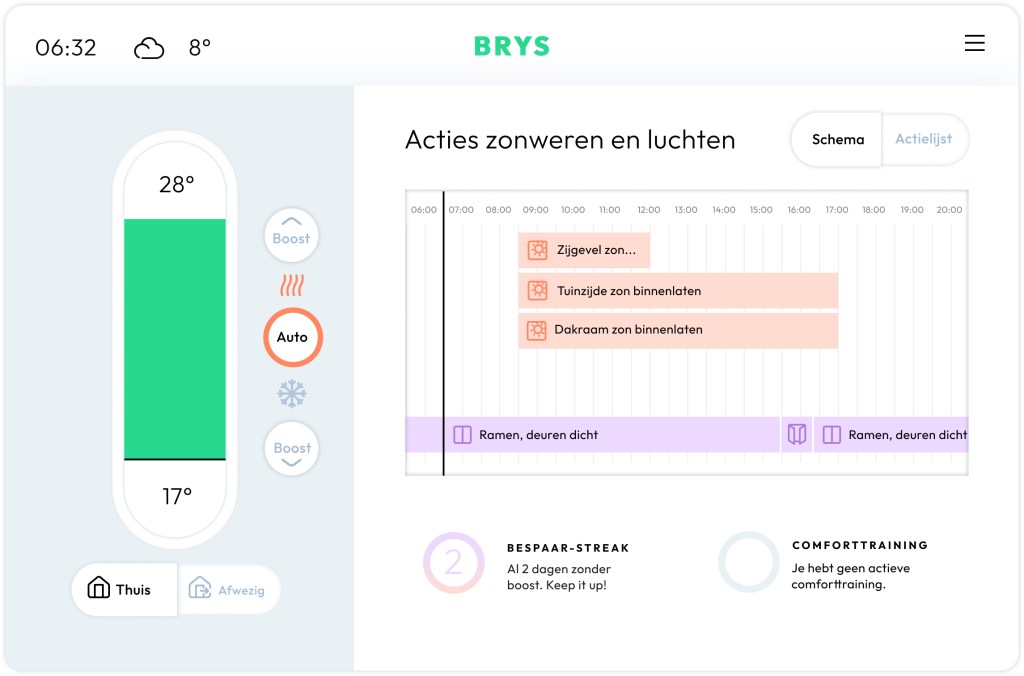
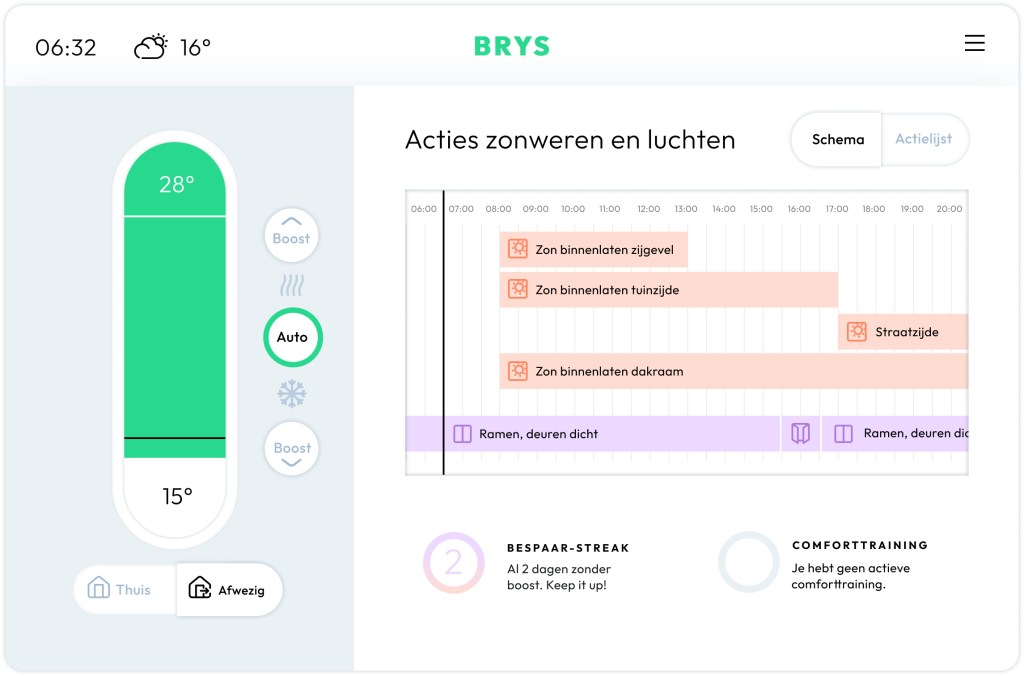
That is why BRYS supports households in effectively shading and ventilating their homes. BRYS does this by means of a clear schedule and an action list. The schedule shows when blinds and windows can be opened and closed to make optimal use of the sun and outside air in controlling the indoor climate.
Research shows that outdoor shading protection, as well as the closing of (reflective) curtains, can reduce or prevent overheating. Many households do not take full advantage of this opportunity. Reasons for this are varied, but often mentioned are a feeling of being trapped, and a need for views and light. By showing in the overview when it is best to close the blinds and when they can be opened again, residents are expected to get more motivation to apply the strategy.
For many people, effective airing also goes against fixed habits. In hot weather and rising indoor temperatures, there is a strong tendency to open windows and doors. The outside temperature is often not taken into account. The so-called deceptive breeze (the feeling of coolness due to passing air) contributes to the letting in of warmer outside air. BRYS keeps track of when the outside temperature becomes higher or lower than the indoor temperature. Information about the time at which the windows are allowed to open is expected to provide an extra motivation to keep the windows closed for a while.
In the action list, notifications can be set for different members of the household. The action list also gives an indication of the expected effectiveness of an action.


BRYS creates this schedule based on knowledge about the orientation of the dwelling, set by the user (see image below), and the KNMI (Dutch Meteorological Organisation) weather forecast for the next 24 hours. A calculation model for determining the actions and effectiveness indication will be made available here in the coming weeks under point 5.

BRYS also supports effective shading and ventilating in winter and autumn. In these seasons, letting the sun in can actually have a positive effect on the indoor climate and save energy by heating up the home. Airing also remains important in winter for regulating the humidity level in the home. In BRYS, the rule of thumb of airing for half an hour a day has been adhered to. For this purpose, the warmest moment of the day is taken into account as long as this temperature is at or below the target temperature (see Comfort range) of the season.

Comfort range

BRYS works with a wide comfort range. Instead of the usual 20-22 degrees Celsius, BRYS considers the range between 17-28 degrees Celsius to be comfortable. BRYS follows research into adaptive comfort, the human ability to adapt, and the health benefits of varying indoor temperatures.
In this way, a space is created in which residents are given the opportunity to make themselves comfortable. Although somewhat controversial in the market, this requires active involvement of residents in ‘making’ their own comfort. Research shows that this is ultimately recommended as a sustainable step. By involving residents more in making their own comfort, solutions are better suited to local circumstances, the capacities of residents are used more (for example, a thermostat cannot put on or take off a sweater) and residents gain more knowledge about complex comfort systems. Ultimately, this knowledge helps to prevent inappropriate use and the associated energy waste, wear and tear, inconvenience, service costs, etcetera.
The comfort range can be set by the occupants. This range is used to calibrate advice for shading and ventilating, aiming for a gradual shift in the indoor temperature throughout the seasons. This is called the target temperature. For example, in March BRYS will not immediate let the temperature rise towards a maximum indoor temperature of 28 degrees, although this could be reached on a sunny day with a well-insulated house with large windows. On such a day, sun protection is applied and an airing moment is recommended to keep the temperature below 23 degrees, for example. This way, the contrast with the surrounding days, where it may not get warmer than 17 degrees, is limited in a natural way.
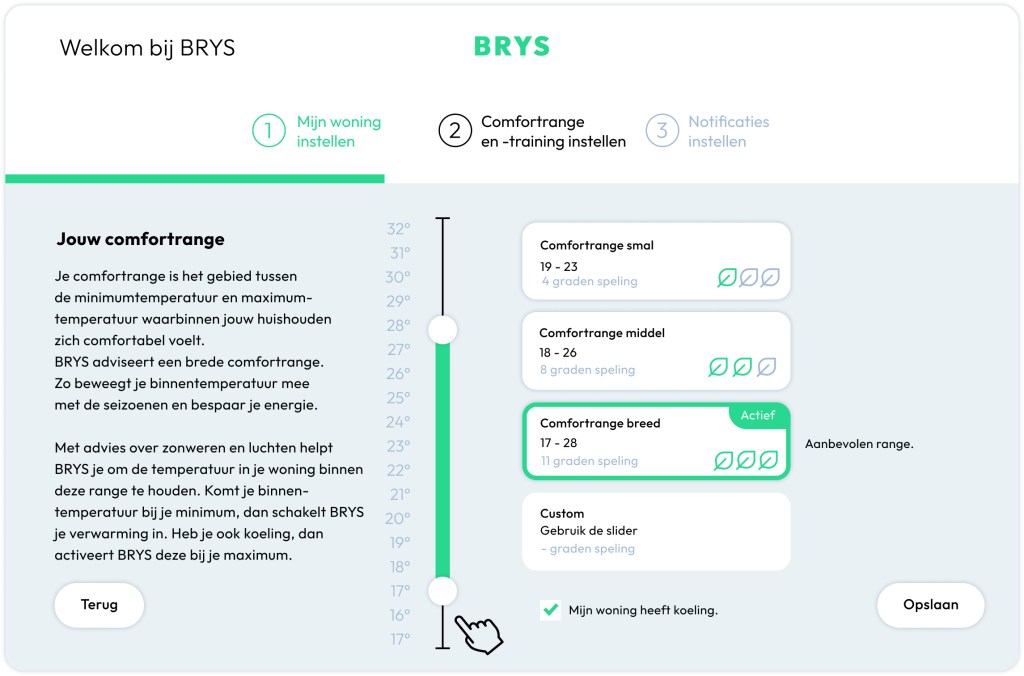
If a house also has active cooling, the upper limit, if reached after the application of blinds and ventilation, is used for the possible activation of the cooling.
For so-called ‘fast’ systems (high-temperature heating such as central heating boilers and radiators, air-to-air heat pumps such as air-conditioning, and infrared heating), the thermostat has an ‘Away’ mode. Activating this mode switches the heating down to 15 degrees Celsius (as is common in current systems) and switches off the cooling. The settings of this mode can be adjusted by residents.

Boost function
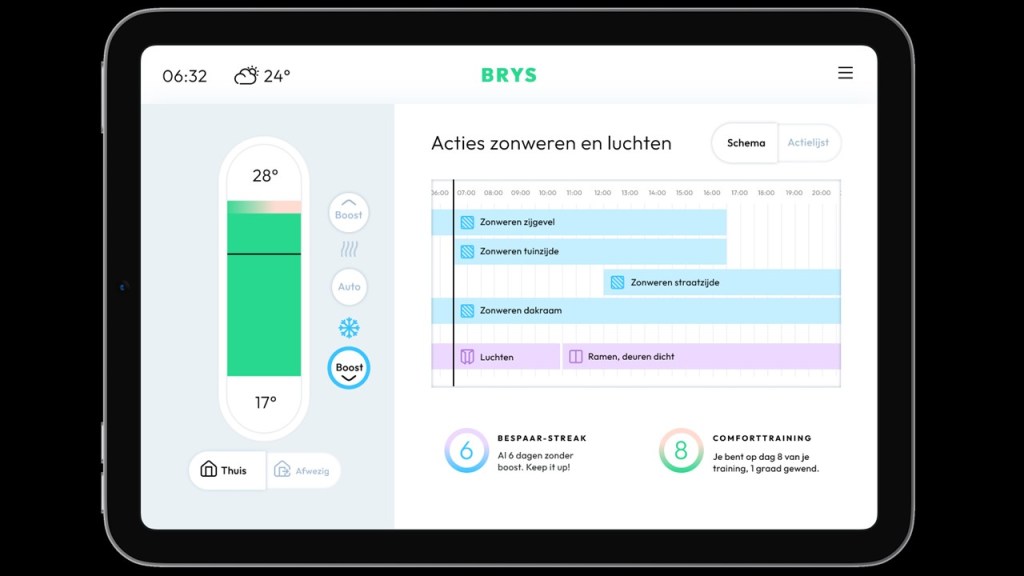
The boost function is also only intended for the ‘fast’ systems (high-temperature heating, air-to-air heat pumps, infrared heating) that are common in the Netherlands. For situations in which residents are not comfortable within the comfort range, the Boost is a way to temporarily activate heating or cooling without adjusting the range. The idea behind this is again to approach the household as an active manager of their own comfort. Discomfort within the comfort range is often only a temporary situation. Think, for example, of a visit from grandma, or a sick member of the household. With a boost, extra heat or coolness is provided temporarily, after which the system deactivates again until the resident indicates that they need support again.
The save-streak-counter rewards residents for using this feature as little as possible.
Comfort training

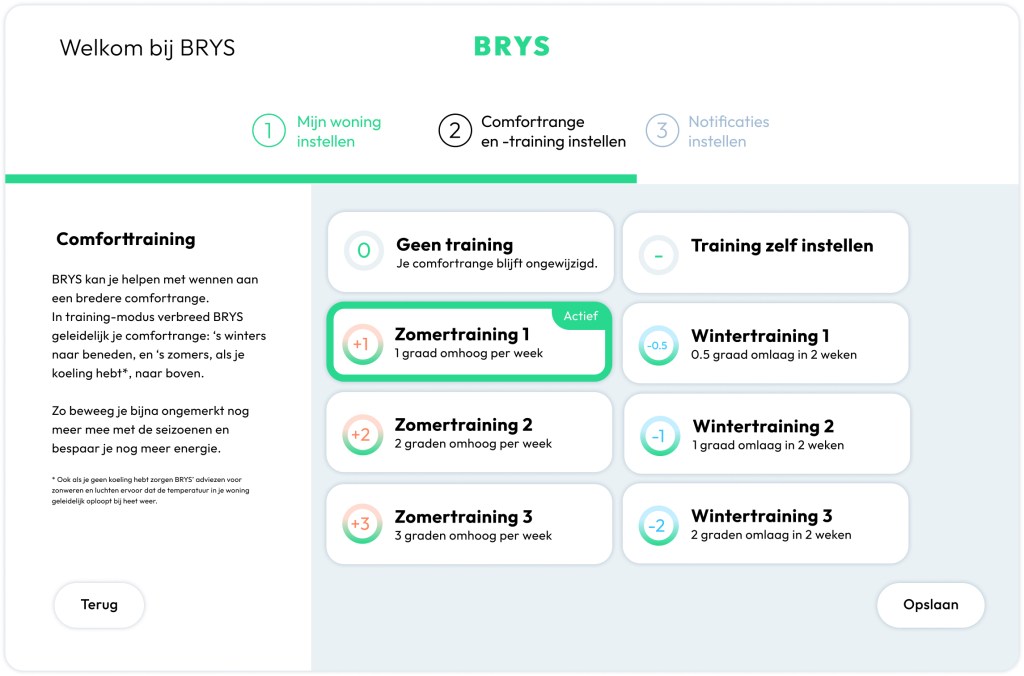
The BRYS comfort training helps residents to increase their comfort range. Research in physiology shows that humans are quite capable of adapting themselves to changing temperatures. BRYS helps residents with this by gradually lowering the temperature in the home – in autumn/winter – or raising it – in spring/summer. The BRYS interface offers several standard options for comfort training. In addition, particular programs for training can be set up by the residents.
5. BRYS calculation models
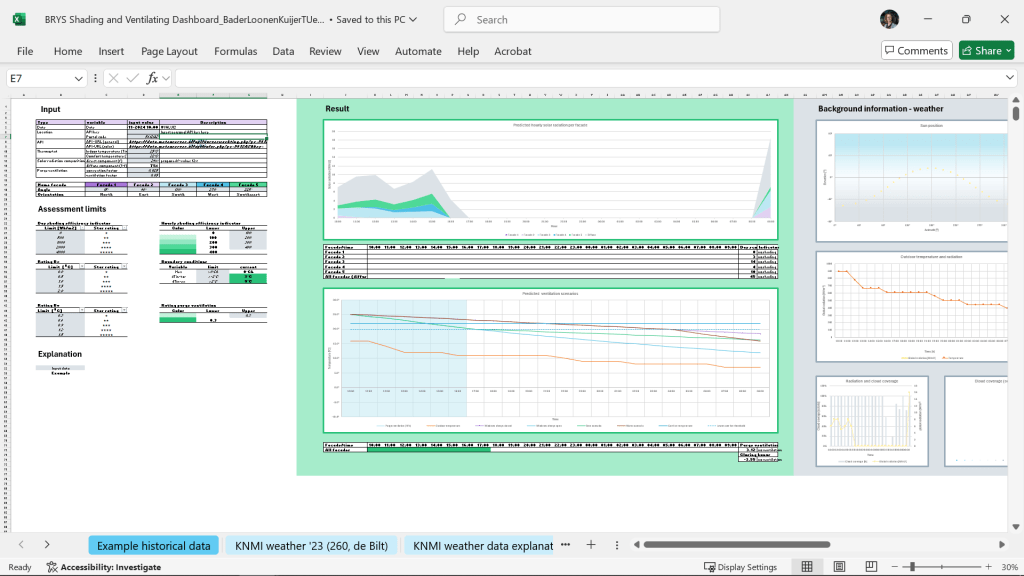
In collaboration with Vera Bader and Dr. Roel Loonen of the Department of Building Physics at Eindhoven University of Technology, calculation models were developed to determine the schedules and effect indications for shading and ventilating in the BRYS interface. An Excel file with a model dashboard can be found here. The background of the model with explanations of its design decisions can be found in this accompanying report.
 Home
Home 